Airfare mechanics · flight guide
Why flight prices change: the forces behind the fare
- last reviewed
- 1 Sep 2026
- reading time
- 9 min
On this page11 sections
Two people can sit beside each other on the same flight, eat the same snack and arrive at the same minute after paying very different prices. The airline is not confused. It is selling access to a limited, perishable product under different conditions.
Once the aircraft door closes, an empty seat earns nothing. Before that moment, the airline is trying to sell each seat to the person most willing to pay for it without frightening away everyone else. The price moves because the estimate of that willingness changes.
There is no single lever behind an airfare. There is a stack.
The seat is the same; the product is not
Traditional airline pricing divides a cabin into booking classes, often called fare buckets. Several buckets can be available in economy at once. They may differ in price, change rules, refundability, mileage credit and how many seats the airline is willing to sell at that level.
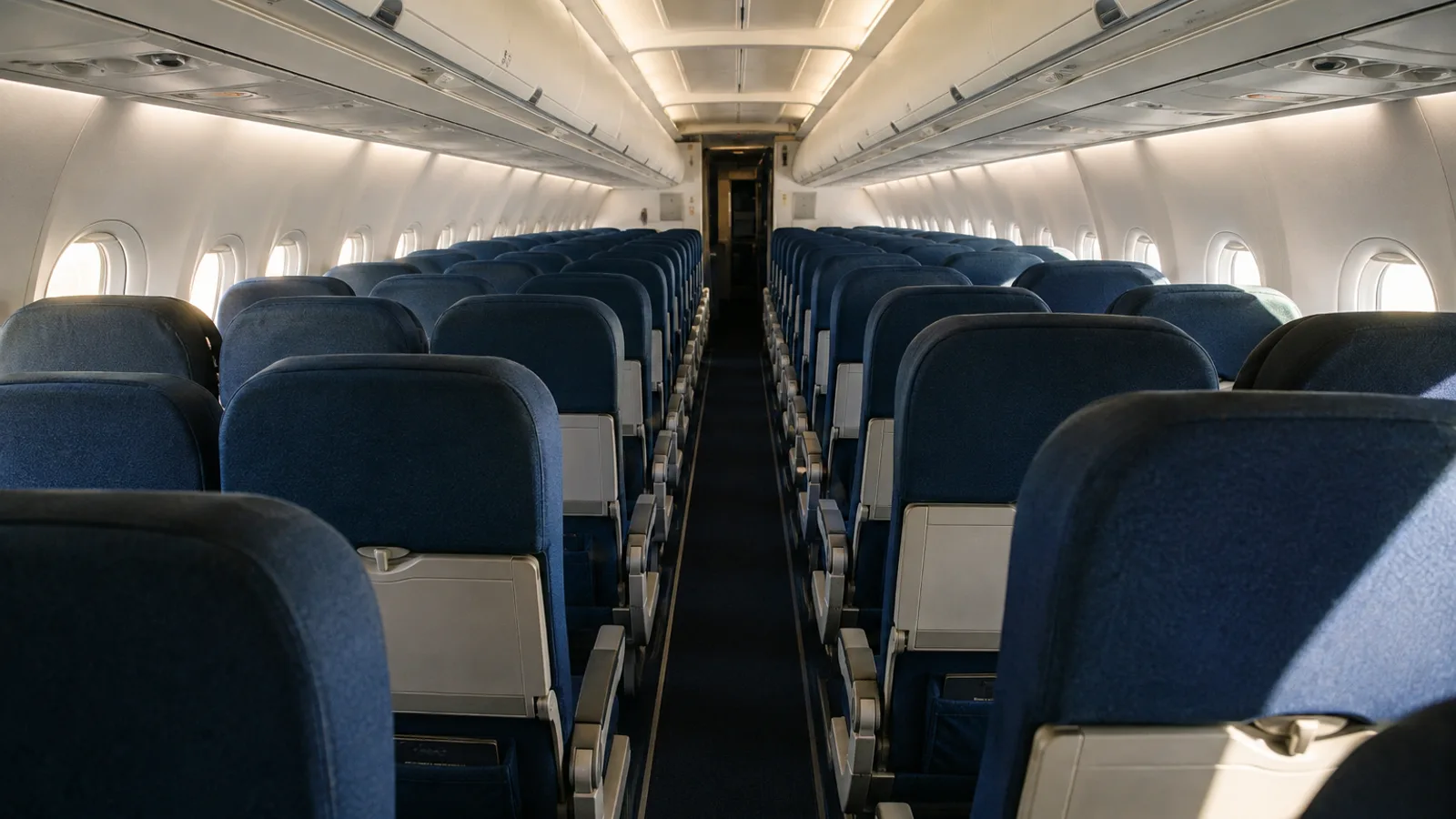
When a cheap bucket closes, the next available fare can be much higher even though the seat map looks empty. A seat map shows seats selected by passengers; it does not show the airline’s unsold inventory or how that inventory is distributed across fares.
Modern retailing adds more flexibility. Airlines can vary prices more continuously and bundle seats, bags, flexibility and other services into tailored offers. IATA describes this shift as a combination of dynamic pricing, continuous pricing and dynamic bundling in its Dynamic Offers factsheet.
For the traveller, the practical lesson is simple: the last cheap seat in a fare category can disappear without the flight becoming full.
Demand moves the inventory line
Airlines begin with forecasts. They know how a route usually sells, which days attract business travel, when school holidays begin and how late different passengers tend to book.
Then the live booking curve starts to replace the forecast.
If a flight sells faster than expected, lower fares can close. If it sells slowly, the airline may keep them open, reopen inventory or promote the route. The same departure can therefore rise, fall and rise again. Time passing matters, but only because it brings more information about demand and leaves fewer opportunities to sell the seat.
This is why “prices always rise as departure approaches” is directionally useful but not mechanically true. A weak flight can get cheaper. A strong flight can become expensive months out. The closer departure gets, the less room there is for the airline to be wrong.
Season and exact date are different things
July may be an expensive month for a Mediterranean route, but not every Tuesday in July behaves the same. Season creates the broad shape; exact dates create local peaks and gaps.
Prices react to:
- school holidays and public holidays in both markets;
- festivals, conferences and sporting events;
- weekend and business-travel patterns;
- cruise departures and package-holiday changeover days;
- the timing of connecting flights at a hub.
That last point is easy to miss. A short feeder flight can be expensive because it connects neatly into a bank of long-haul departures, while a service two hours later is cheap because the onward connections are poor.
Read a monthly chart for the season, then a day-level calendar for the actual trip. One cannot replace the other.
Competition can matter more than distance
Airline tickets are sold in markets, not by the kilometre.
When two or three carriers compete nonstop, one airline’s sale can force the others to respond. When a low-cost carrier enters a route, the incumbent may open lower fare classes. When capacity disappears, the reverse can happen quickly.
A nearby airport can belong to a completely different competitive market. London Heathrow, Gatwick, Luton and Stansted do not have the same airlines, slots, connecting passengers or costs. A traveller sees “London”; the pricing system sees different products.
This is why equally distant origins can produce very different fares to the same destination. The aircraft’s fuel burn matters, but competition decides how much of the market the airline can capture at each price.
Schedules and capacity change the equation
Price can move even when demand does not.
An airline may replace a larger aircraft with a smaller one, remove a frequency, add a seasonal service or retime a flight. A competitor may enter or leave. A connection may become legal or impossible after a schedule change. Each event changes the number and quality of sellable itineraries.
Capacity changes are particularly visible on routes with few daily options. Remove one flight from a market with two departures and the remaining service becomes more valuable. Add a second daily nonstop and the first may have to compete.
The effect is not always immediate in a public fare chart. Distribution systems and sellers cache results, and different channels may update at different times. Always confirm the final itinerary and price at checkout.
Connections create prices that distance cannot explain
A connecting fare is not necessarily the sum of its two flights.
An airline can price Rome–London–New York as one market while selling Rome–London and London–New York separately at very different totals. Partnership agreements, married-segment logic and route-specific fare rules can make a connection cheaper than a nonstop or, occasionally, cheaper than one of its own segments.
This also creates traps:
- Separate tickets may look like one journey in search results but offer no missed-connection protection.
- Self-transfers may require immigration, baggage collection and another check-in.
- Airport changes can be hidden inside a city name.
- Mixed cabins can place the shortest segment in business and the long flight in economy.
A strange price is sometimes a clever fare construction. It is sometimes a worse product. Inspect the segments before celebrating the number.
Fare rules and bundles change what “the price” means
Airlines increasingly sell families such as Basic, Standard and Flex. The cheapest family may exclude seat selection, changes and baggage; a higher family may include them for less than buying each extra separately.
When comparing sellers, check that they are pricing the same fare family. One agency may lead with a personal-item-only fare while another displays a cabin bag. The first is not necessarily undercutting the second.
For a traveller who needs a checked bag, the relevant price is the cheapest fare with that bag. For a business trip that may move, it may be the cheapest changeable fare. Product definition comes before price comparison.
Currency, taxes and point of sale
Taxes and airport charges can create large differences between routes and sometimes between directions. Currency movements can change the displayed total even when the underlying fare does not move.
Some airlines also publish different offers by market or point of sale. That does not mean changing a website country is a free trick. A foreign price can require a local payment method, carry different consumer terms or be converted poorly by the card issuer.
Compare the amount your card will actually be charged, in a currency you understand. Reject any seller that introduces mandatory fees only after you have invested time in the checkout.
What probably did not move the fare
Your cookies did not make the whole market more expensive. A repeated search can coincide with inventory changing or a cached result being refreshed. Personalised offers exist, and currency or market settings can differ, but clearing cookies does not reopen a sold fare class.
Tuesday did not trigger a universal sale. Airlines reprice continuously. A weekly pattern found across many bookings does not create a reliable appointment for one route.
The seat map did not prove the flight was empty. Many passengers have not selected seats, and blocked seats are not necessarily sold.
The headline fuel price did not rewrite your ticket overnight. Fuel affects airline economics and longer-term pricing decisions, but the fare in front of you is also shaped by demand, competition and inventory.
These myths survive because each can appear true once. A lower fare after clearing cookies is memorable. The hundreds of searches where nothing happens are not.
What you can actually control
Work down this list. The largest available lever is usually near the top:
- Destination or origin. If the trip is exploratory, compare where the market is cheap from your airport. If nearby departure airports are realistic, include them.
- Travel month. Move outside peak demand if the purpose of the trip allows it.
- Exact dates. Test adjacent date pairs while preserving trip length.
- Itinerary quality. Decide what one stop, a longer layover or a secondary airport is worth.
- Fare family. Compare the all-in product, including bags and flexibility.
- Purchase timing. Track the route and book when a usable fare reaches your target.
The order matters. Spending three weeks trying to time the purchase of a fixed Saturday nonstop may save less than moving the trip by one day.
Why predictions can help without being promises
A price prediction estimates the probability that fares will rise or fall from historical patterns and current signals. It cannot know that a group will buy the remaining cheap seats this afternoon, that an airline will launch a sale tomorrow or that a schedule will change.
Use a prediction as one input:
- How unusual is today’s fare for the route?
- How fixed are your dates and itinerary?
- How much capacity appears to remain?
- How costly would losing this fare be?
- Is the ticket flexible enough to reduce regret?
The best booking decision is not the one that perfectly predicts the minimum. It is the one that secures an acceptable trip at a price you understand.